7 Red Flags to Look for Under Your Deck: A Structural Integrity FAQ
A deck in Florida does not age like a deck in the Midwest. The combination of intense ultraviolet exposure, high humidity, and salt air accelerates the breakdown of wood fibers and the oxidation of metal fasteners. Most homeowners only notice the surface—the graying boards or the peeling stain—while the actual structural risks remain hidden underneath, where moisture traps against the house and within the soil.
If a deck feels "bouncy" or pulls away from the exterior wall during a storm, the window for a simple repair has likely closed. This guide outlines the specific indicators of structural compromise and the necessary steps to verify the safety of an outdoor living space. It is written for property owners who need to distinguish between cosmetic aging and foundational failure.
Why Florida deck frames fail prematurely
The subtropical climate turns small installation errors into structural liabilities within a few seasons. Standard wood frames fail when moisture cannot escape the assembly, leading to three primary failure modes:
- Improper flashing at the ledger board allows water to seep behind the siding, rotting the rim joist of the house itself.
- Fasteners made of standard galvanized steel react with the chemicals in pressure-treated decks when wet, leading to accelerated corrosion.
- Over-saturated sandy soil loses its bearing capacity, causing concrete footings to sink or tilt unevenly.
- Vegetation allowed to grow directly under or against the frame creates a microclimate of constant dampness.
The deck safety playbook: Identifying structural red flags
1Probe for wood rot at the grain
Use a flathead screwdriver to press into the wood at the base of posts and where joists meet the beam. If the screwdriver sinks more than a quarter-inch into the wood with minimal pressure, or if the wood flakes off in soft, dark chunks, the cellulose has been compromised by rot. Pay close attention to the "splash zone" within six inches of the ground.
2Inspect the ledger board connection
The ledger is the horizontal board that attaches the deck to the house; failure here is the leading cause of deck collapses. Verify that the board is secured with structural lag screws or bolts, not just nails, and look for a metal or plastic flashing cap over the top. According to the Deck Safety Inspection Guide from Currituck County, all connectors must be tight and free of significant rust to maintain a safe load path.
3Evaluate metal connector corrosion
Look at the joist hangers—the U-shaped metal brackets holding the floor beams. If they are covered in "white rust" (zinc oxidation) or red flakey rust, they are losing their structural integrity. In coastal environments, the salt air can eat through standard fasteners, necessitating the use of stainless steel or G185 galvanized coatings.
4Verify footing stability and soil contact
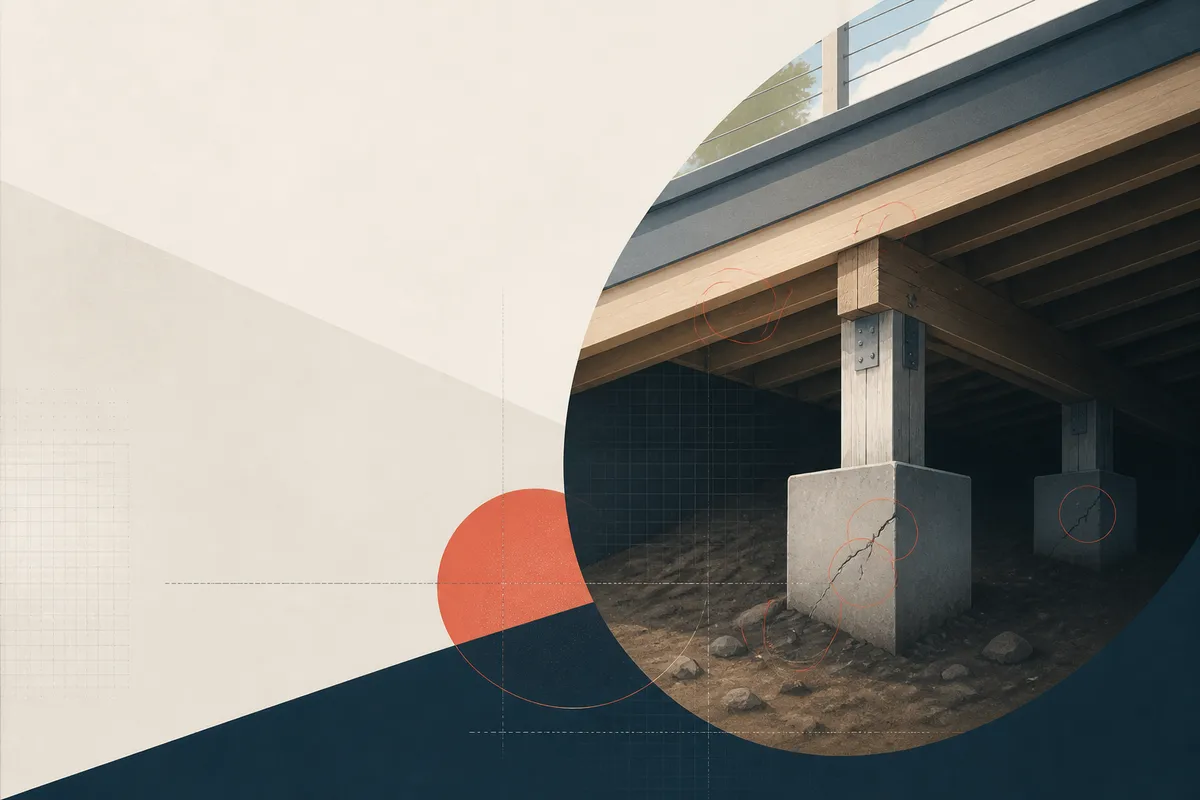
Examine the concrete footings where the vertical posts meet the earth. If there is a visible gap between the post and the concrete, or if the footing is cracked and leaning, the deck is no longer level. In the Brandon service area, sandy soil can wash away during heavy rains, undermining footings that were not poured to the appropriate depth or diameter.
5Check for "ghosting" and board gaps
Walk the perimeter and look for gaps where the deck frame should be flush against the house or where beams sit on posts. If you see daylight through a connection that should be tight, or if there are "ghost" marks where a board has shifted an inch from its original position, the frame is moving. This indicates that the lateral bracing is insufficient or the fasteners have sheared.
Managing the impact of Tampa’s high water table
In the Tampa region, the soil composition varies significantly from the coastal flats to the inland ridges. High water tables mean that footings are frequently submerged or surrounded by saturated soil, which can lead to "heaving" or sinking if the footings were not engineered for local conditions. When assessing a structure, it is critical to determine if the original builder pulled the necessary permits. Per the City of Tampa Construction Services FAQ, permits and inspections are required for most structural work to ensure the design meets local wind load and foundation requirements.
How Deck Builders of Tampa helps
A structural assessment typically begins with a site visit to map the existing load-bearing points and identify any deviations from current building codes. For homeowners dealing with aging structures, a standard scope of work involves checking the "ledger-to-rim" connection, verifying the depth of footings, and testing the wood density of the primary beams. If the frame is sound but the surface is failing, a deck resurfacing may be appropriate; however, if the core "skeleton" shows signs of fungal decay or fastener fatigue, a full rebuild is often the only way to meet modern safety standards.
Frequently asked questions
Can I just add more nails to a loose ledger board?
No, nails should never be the primary fastener for a ledger board because they can pull out under the lateral pressure of a moving crowd. Structural failures often occur when nails "withdraw" from the house rim joist. Code-compliant repairs require through-bolts or specific structural wood screws designed to resist withdrawal forces.
How do I tell the difference between a surface crack and a structural split?
Surface cracks, or "checking," occur as wood dries and typically run along the grain without going through the entire board. A structural split goes completely through the wood or occurs at a connection point, such as a bolt hole. If a split is located where a joist rests on a beam, it compromises the deck's ability to hold weight.
My deck is only five years old; why is the wood already soft?
In Florida, if the wood stays constantly wet due to poor drainage or lack of airflow, rot can set in very quickly. This often happens when decks are built too low to the ground without a vapor barrier or when debris is allowed to collect in the gaps between boards, trapping moisture against the joists.
What should I look for after a major storm in Tampa?
After a significant weather event, check the points where the deck attaches to the house for any new gaps. Look for signs of soil erosion around the footings and check the railings to ensure they haven't been loosened by high winds. If the deck sways more than it did before the storm, the internal bracing may have been compromised.
Is it possible to repair a sinking footing without tearing down the deck?
It is possible to jack up a section of the deck and pour a new, properly sized footing, but this is a complex technical task. It requires temporary shoring to hold the weight of the structure while the old footing is removed and the soil is stabilized. This approach is usually only cost-effective if the rest of the deck frame is in excellent condition.
How often should I get a professional deck safety inspection?
The North American Deck and Railing Association suggests a professional inspection annually, but at a minimum, homeowners should conduct a thorough self-check every spring. If your deck is more than 10 years old or was built before modern lateral load requirements were established, a professional evaluation is recommended to ensure it can handle current occupancy loads.
What happens when you get in touch: you describe the situation, we ask the few questions that actually change the answer, and you get a clear scope and next step — no obligation.